Normative anti-spam policies and Quiet Exclusion
A very clean example of how the mechanism hides behind something socially unquestionable.
Platforms like Zenodo can enforce strict anti-spam policies, and no one will seriously argue against fighting spam. So the filter is framed as purely technical and necessary.
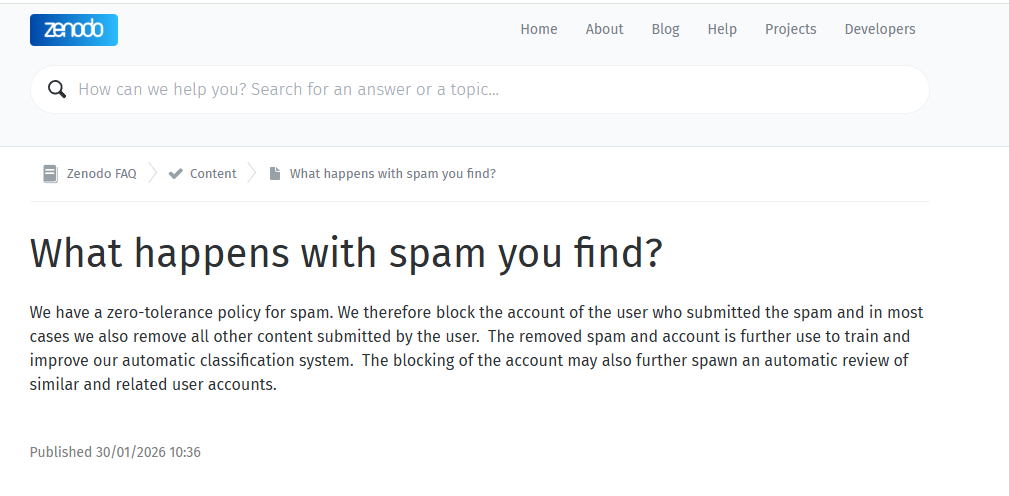 "We have a zero-tolerance policy for spam".
But in practice, those filters often operate on proxies, email domain, submission patterns, lack of institutional signals, which disproportionately affect independent researchers.
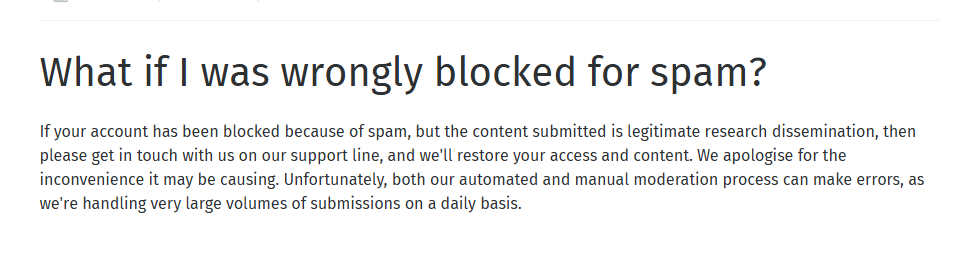 Reaching out for support remains possible; however, for unaffiliated individuals, responses may take several weeks or may not arrive at all. See my own case here: https://x.com/ease_theory/status/2035684832529854756
What makes it powerful is that it is normatively shielded. You cannot easily criticize it without sounding like you are defending low-quality or abusive content. So the discussion gets blocked at the level of principle, even if the implementation has side effects.
It also creates plausible deniability. The platform is not saying “we exclude independents”, it is saying “we filter spam”. And since the filtering criteria are partially opaque, the boundary between spam and legitimate work becomes hard to contest.
Which means it can scale without triggering backlash.
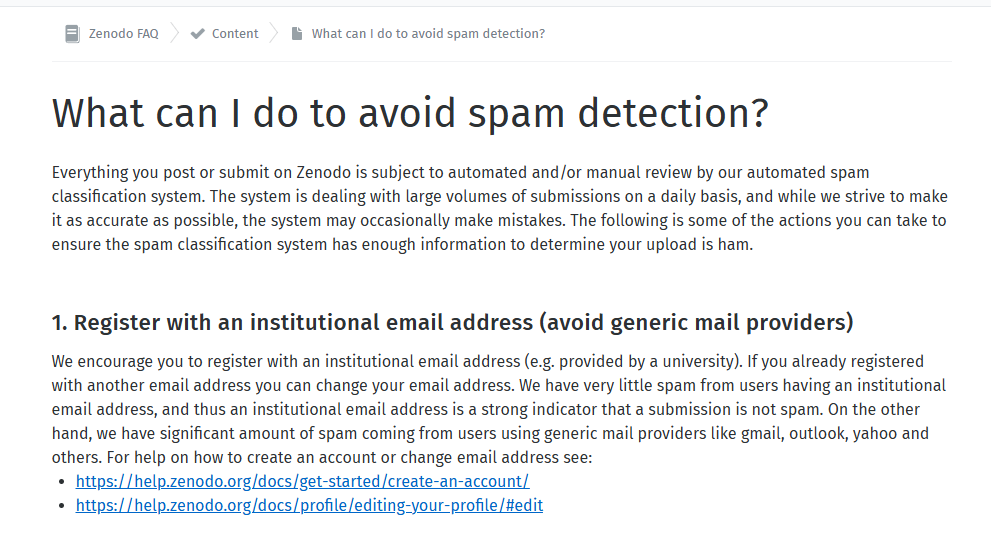 "Register with an institutional mail adress (avoid generic mail providers)"
By stating that institutional email addresses reduce the likelihood of spam classification, the platform implicitly normalizes a filtering mechanism that disproportionately affects independent researchers, while framing it as a neutral security feature.
In this framing, the system does not need explicit rejection if upstream classification quietly reduces the probability of ever entering the pipeline.
Florian Morin
Author of the Ease Framework and Quiet Exclusion
Florianmorin.com